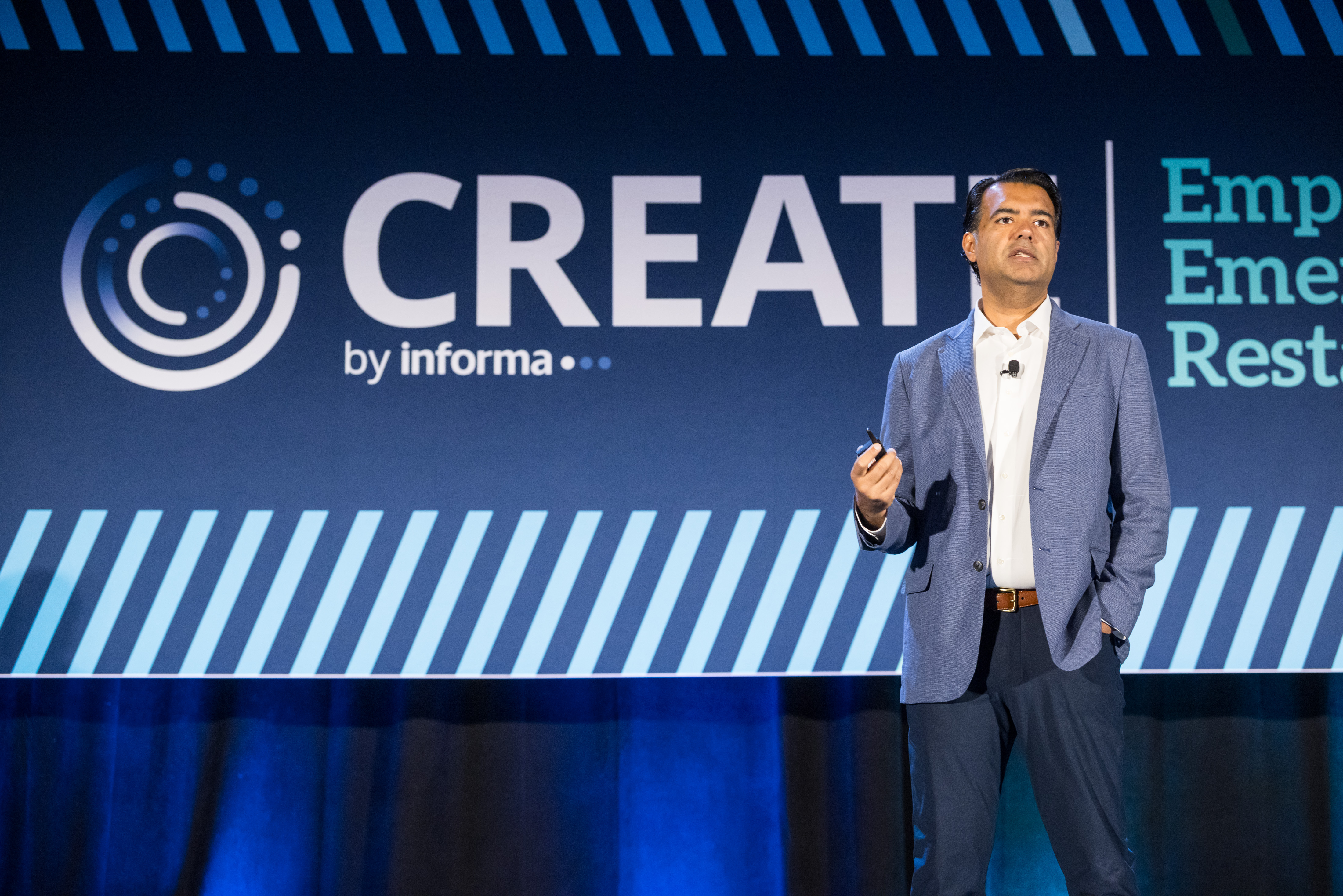
CHICAGO, Illinois – A decade ago, a differentiated concept and a credible growth story could command a premium. Today they are the price of admission. That was the through-line of Ashish Seth's opening keynote at the Investment Summit at CREATE 2026, held July 20–22 at the Terranea Resort in Rancho Palos Verdes, California.
The shift has a cause. When Chipotle demonstrated what a fast-casual brand could become, investors went looking for the next one, and roughly forty to fifty firms spent a decade backing concepts on the strength of an idea. The dream was rational – a modest investment worth billions inside ten years is worth chasing. What the capital found was that the model is harder than it looks. Company-owned fast casual is capital-intensive, scaling past a home market defeats most brands, and food and labor never stopped being volatile. The sector got overbuilt, and the pandemic sharpened every one of those pressures. As industry consultant Malcolm Knapp puts it, the restaurant business is simple – and simple is hard.
What emerged is a market that pays for evidence. "We are in a show me, not a believe me market," Seth told the room. If a brand's customers love it, that shows up in repeat business. If it is a growth concept, that shows up in units actually opened over the past two or three years. If the brand carries equity, that equity appears in store-level financials. Name recognition on its own does not carry a valuation – Seth pointed to a client who asked what their New York provenance was worth while running eleven percent store margins.
The same skepticism applies to the numbers a founder leads with. Company-owned brands trade in general ranges – roughly five to ten times EBITDA in casual dining, eight to thirteen in fast casual, ten to twenty in quick service – but Seth was candid that he presents those ranges nervously, because averages conceal more than they reveal. A consolidated average unit volume can be one strong home market carrying a set of weaker ones. Buyers take the business apart market by market, and portability is what they are testing: not whether a concept travels from Los Angeles to San Diego, but whether it works in Phoenix, Salt Lake City, and Dallas.
The point Seth pressed hardest, though, was that valuation is not the deal. Premium multiples circulating in the market frequently arrive attached to liquidation preferences of three to five times – protection for the incoming investor that can leave a founder with a headline number and very little else. "I will never advise a founder to take a liquidation preference, especially as high as three times," he said. Value also leaks after signing, through operating agreements, the rights attached to rolled equity, and how net working capital and debt get calculated. The deal is not done until the paper is signed and the cash has landed.
None of which is an argument for pessimism. Founders should be optimistic and aggressive in representing their businesses, Seth said; expectations are simply the factor that most often decides whether a transaction closes. And the test of whether an expectation is realistic is competitive process rather than a single conversation. "The market is the auditor of value." By that measure, he described restaurant valuations today as healthy – supported by a market that finally has a clear-eyed view of what building a multi-unit business requires.

July 20, 2026
June 29, 2026
June 24, 2026